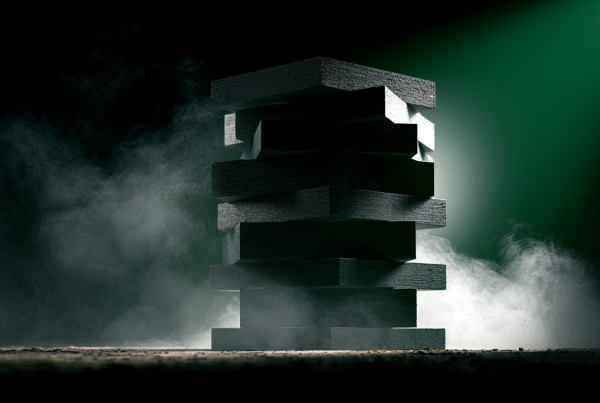
Campaigns perform better when every execution comes from one clear, durable idea.
Most ad campaigns don’t collapse because the design is weak, the copy is flat, or the media plan missed a trick. They collapse because nobody did the hard part upfront: finding the idea that can actually carry the weight of the whole thing.
I’ve seen plenty of campaigns that looked polished in review decks and died the second they hit the real world. Why? Because they were assembled, not built. A nice film here. A decent social concept there. A few headlines, a landing page, maybe some influencer packaging. Everything looked competent on its own. Together, it felt like a group project between strangers.
The difference between a campaign that holds and one that drifts is what I’d call the creative spine. One central idea. Clear enough to explain in a sentence. Strong enough to stretch across channels. Sharp enough that every person working on the campaign can feel when something fits it and when something doesn’t.
If that spine isn’t there, the work starts compensating. Teams overproduce. Clients add messaging. Media teams try to solve creative problems with placement. Strategy decks get longer. The campaign gets broader, louder, and more forgettable.
The Campaign Idea Is Not the Same as the Tagline
This is where a lot of teams kid themselves. They think they have a campaign idea because they have a line. They don’t. A tagline can be useful. It can also be decorative wallpaper pasted over weak thinking.
A real campaign idea has pressure in it. It creates possibilities. It gives the art director, copywriter, editor, social team, and media team something to build from without reducing everyone to repeating the same sentence in twelve formats.
If your “big idea” only works as a headline, it’s not a spine. It’s a sticker.
The test is simple: can the idea generate different expressions without losing its identity? Can it become a film, a retail activation, six social posts, display, OOH, a PR angle, and sales collateral while still feeling like one campaign instead of a batch of vaguely related assets? If not, the idea is too thin.
Great campaign ideas tend to do three things at once. They say something true about the audience. They dramatize something meaningful about the brand. And they create a system for execution, not just a single execution. Miss one of those and the work usually starts wobbling.
When There’s No Spine, Everything Becomes Optional
Weak campaigns have a very specific smell. Every choice feels negotiable.
The tone changes from ad to ad. The visual language shifts based on who made the asset. The product truth gets buried under trend-chasing. One team is making emotional work, another is making retail work, and a third is making social content that looks like it belongs to a different company entirely. Nobody’s technically wrong, which is exactly the problem.
Without a central idea, there’s no standard beyond “do we like it?” And “do we like it?” is a terrible way to build a campaign. It invites personal taste, hierarchy, politics, and panic into decisions that should be guided by strategic coherence.
This is also why campaign rounds spiral. If the core idea isn’t solid, every stakeholder senses the weakness and starts “helping.” More product. More emotion. More branding. More urgency. More audiences. More versions. More fixes. The work gets swollen because the concept underneath it can’t carry enough meaning on its own.
Strong campaigns are actually easier to make. Not because they require less effort, but because they create boundaries. They tell you what belongs and what doesn’t. They reduce random motion. They make editing possible.
The Best Creative Spine Is Durable, Not Fragile
A lot of campaign thinking is too brittle. It depends on one joke, one visual gimmick, one cultural reference, one director’s flourish, or one perfect script. That can produce a nice ad. It rarely produces a durable campaign.
Durability matters because campaigns live in messy conditions. Budgets change. Formats multiply. Deadlines compress. New stakeholders arrive halfway through. Legal gets nervous. Regional teams need local adaptations. If the idea only works in ideal conditions, it’s not strong enough.
A durable creative spine survives contact with reality.
That doesn’t mean making the idea generic. It means building something with structural integrity. The campaign should still feel like itself when it’s cut down to six seconds, translated into static, adapted for retail, or turned into social content by a different team three months later.
I’m suspicious of ideas that are overly dependent on executional perfection. They impress creative teams because they look expensive, cinematic, or clever. Then the campaign expands and suddenly nobody knows how to keep the quality or consistency alive. The whole thing was being held up by one hero asset.
That’s not a spine. That’s a crutch.
How to Know If the Idea Is Actually Strong Enough
Before a campaign gets approved, there are a few uncomfortable questions worth asking. Most teams skip them because they’re eager to move into production. Bad move.
First: can someone outside the core team understand the campaign idea quickly? Not the strategy. Not the deck. The idea. If it needs ten slides of explanation, it’s probably still half-formed.
Second: does the idea create range? Can it produce multiple executions that are recognizably related but not repetitive? Repetition is not consistency. If every asset is just the same thought wearing different clothes, fatigue will set in fast.
Third: does it sharpen choices? A strong idea makes some executions obviously right and others obviously wrong. If everything can fit, nothing really fits.
Fourth: is it attached to a truth the brand can actually own? One of the fastest ways to kill a campaign is to build it on a sentiment that any competitor could claim with equal credibility. If the idea can be slapped onto three rival brands without much editing, throw it out.
Fifth: can it survive boring formats? This one matters more than creatives like to admit. If the idea only shines in a 60-second film but dies in CRM, display, retail, and organic social, then it’s not campaign-ready. Campaigns don’t live in award case studies. They live in ecosystems.
Creative Consistency Is Not Sameness
Some marketers hear “one clear idea” and immediately make the work too rigid. Same lockup, same line, same layout, same tone, every single time. That isn’t discipline. That’s fear.
The job of a strong spine is not to flatten the campaign. It’s to hold it together while allowing variation. Good campaigns have tension in them. They can move. They can surprise you. They can flex by audience, format, and context without becoming unrecognizable.
This is where experienced creative leadership matters. Junior teams often confuse consistency with duplication. Nervous clients do too. But sameness gets stale quickly, and stale campaigns are usually mistaken for “worn in” when they’re actually just creatively exhausted.
The better approach is to define what absolutely must remain true and what can evolve. Maybe the brand voice stays fixed while the visual form changes. Maybe the emotional premise stays fixed while the messages rotate. Maybe the central provocation remains constant while each channel interprets it differently.
A campaign should feel like a band, not a metronome. You know it’s the same act, but not every track sounds identical.
What Creative Leaders Should Protect
If you’re leading the work, part of your job is protecting the spine from being diluted by convenience. That means saying no more often than people expect.
Say no to extra messages that weaken the central thought. Say no to trend-chasing social ideas that get attention but pull the campaign off-course. Say no to “just one version” for a stakeholder request when that version quietly breaks the system. Say no to polishing disconnected assets and pretending they add up to a campaign.
Protection also means translating the idea clearly enough that every team can use it. A lot of campaign inconsistency doesn’t come from bad talent. It comes from fuzzy articulation. If strategy describes the idea one way, creatives interpret it another way, and channel teams hear something else entirely, fragmentation is guaranteed.
Good creative leaders keep repeating the core idea in plain language. They make it easy to apply, hard to distort, and obvious to defend. They don’t hide behind jargon. They don’t romanticize ambiguity. They give the team something solid.
The Practical Payoff of Getting This Right
Strong creative spine, practical benefits. This isn’t just a philosophical preference.
Work gets approved faster because there’s a clearer basis for decision-making. Production gets more efficient because assets are being built from one system rather than reinvented from scratch. Media performs better because the campaign shows up coherently across touchpoints. Audiences remember it because memory likes pattern, not chaos.
And maybe most importantly, the work has a better chance of feeling like it came from a brand with a point of view instead of a marketing department trying to satisfy a checklist.
That’s what people respond to. Not just polish. Not just frequency. Not just smart targeting. They respond to campaigns that feel like they know what they’re about.
If a campaign feels scattered, the answer usually isn’t “make more stuff.” It’s “find the idea that should have been there in the first place.” Everything gets easier after that. Not easy. Easier.
Because once the spine is real, the campaign can finally stand up.