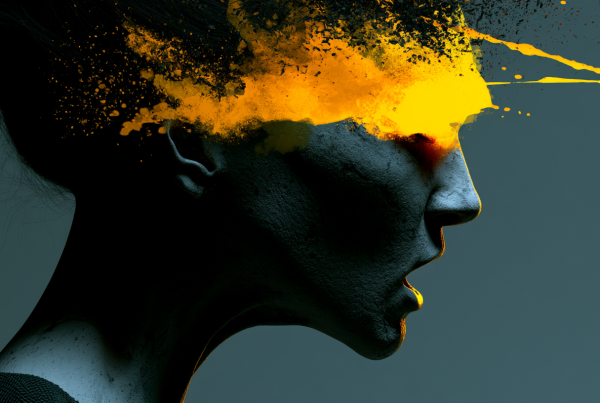
The final value of AI-assisted work often comes from selection, refinement, and restraint.
AI has made it ridiculously easy to generate design. That part is no longer impressive. Anyone can prompt a tool and get a page full of logos, layouts, ad concepts, product shots, social graphics, or moodboards in minutes. The machine is fast, tireless, and weirdly confident. Great. So what? Speed is not judgment. Volume is not quality. Output is not taste.
This is the part a lot of people still don’t want to hear: the most important creative work often starts after the AI is done. Not during the prompt. After the flood. When someone with an actual point of view has to look at all that generated material and decide what deserves to live, what needs surgery, and what should be deleted without ceremony.
That’s not a minor cleanup step. That is the job.
AI is good at producing. It is not good at caring.
AI can generate polished-looking work at a speed that makes people panic. Marketing teams see ten campaign directions in an afternoon and think they’ve saved a week. Maybe they have. But usually what they’ve saved in production time they immediately risk losing in clarity, consistency, and brand integrity.
The issue is not that AI makes ugly work. Sometimes it makes work that looks pretty good. The problem is that it does not care whether the work means anything, aligns with the brand, respects hierarchy, lands emotionally, or creates the right kind of tension. It doesn’t know when a visual feels generic instead of iconic. It doesn’t know when a headline sounds smart but says absolutely nothing. It doesn’t know when a campaign asset technically fits the brief while completely missing the mood.
That gap matters in marketing creative because “close enough” is usually expensive. Close enough gives you campaigns that blend in, brands that flatten out, and content calendars full of assets nobody remembers.
Human editing is where relevance gets restored. It’s where someone says: this image is flashy but off-brand, this line is clean but hollow, this composition is balanced but dead, this concept is novel but not useful. AI won’t make those calls with any conviction. A good creative lead will.
Selection is a creative act, not admin
One of the dumbest ways people talk about AI is by treating the selection phase like clerical work. As if the tool did the magic and the human just picked a favorite. That gets the hierarchy backward.
Selection is not sorting. Selection is authorship.
When you review 50 generated options and only one has the right emotional temperature for the brand, choosing that one is not passive. It requires pattern recognition, strategic judgment, taste, and restraint. More importantly, it requires the confidence to reject things that look finished but feel wrong.
That confidence is increasingly rare because AI floods the room with “pretty decent.” And “pretty decent” is dangerous. Teams get hypnotized by quantity. Stakeholders start comparing options as if more equals better. Suddenly the conversation shifts from “Is this the right idea?” to “Which of these twelve acceptable versions should we move forward?” That’s how mediocre work gets approved: not because it was great, but because it survived a crowded room.
Strong creative direction means narrowing brutally. It means recognizing that abundance is not a gift unless someone is willing to edit hard. If everything stays on the wall, the wall becomes useless.
Refinement is where brand actually shows up
Most AI-generated design breaks down in the same place: specificity. It can imitate style. It struggles with intent. That’s why so much AI-assisted marketing creative has the same faint odor of generic excellence. Nicely lit. Well composed. Zero soul. Zero distinction.
Refinement is the process that fixes that. Not by polishing the machine’s output into sterile perfection, but by injecting the things the machine can’t naturally prioritize: brand voice, cultural awareness, product truth, strategic hierarchy, emotional nuance, and all the tiny subjective decisions that make work feel made instead of produced.
A refined piece of creative has decisions in it. The crop is deliberate. The typography has tension. The spacing doesn’t just follow a default pattern. The image choice says something. The line breaks work. The CTA earns its place. The headline doesn’t sound like it came from a motivational poster generator. These details are not decorative. They are the difference between branded communication and visual filler.
Good editors know where the generated draft is lying. They can spot when the visual overpromises, when the copy slips into fake confidence, when the layout performs sophistication instead of creating it. They know when to simplify, when to sharpen, when to strip out the extra flourish that AI added because it statistically looked impressive.
That’s another uncomfortable truth: AI often decorates where a human would decide. Editing is partly the discipline of removing machine noise.
Restraint is the real premium skill now
Since AI can produce endless options, the market is drifting toward excess by default. More variations. More styles. More campaign concepts. More social assets. More motion tests. More copy routes. More visual drama. More, more, more. And most of it should not exist.
Restraint is what keeps creative work from becoming a landfill of possibilities. Restraint says the logo doesn’t need five alternate personalities. The ad doesn’t need every visual trick. The landing page doesn’t need ten emotional promises stacked on top of each other. The concept doesn’t improve because the prompt got more complicated.
In fact, AI often rewards people for being visually indulgent. It makes maximalism cheap. That’s exactly why restraint has become more valuable, not less. A restrained creative director can look at a dozen technically impressive outputs and choose the one with the cleanest signal. They can see when the strongest move is subtraction.
Marketing teams should take that seriously. Audiences are not starving for more content. They are overwhelmed by disposable content. The work that cuts through usually has one thing to say and says it with clarity. Human editing is how you protect that clarity from the machine’s tendency to overproduce and over-style.
Practical ways to edit AI-assisted creative without watering it down
If your team is using AI in the creative process, good. It would be weird not to. But if you want the output to be worth anything, build a review process that assumes the first wave is raw material, not final work.
Start by judging against strategy, not aesthetics. A visually strong asset can still fail the brief. Ask whether the piece supports the brand position, the audience mindset, and the business goal before debating whether it “looks cool.” Cool is cheap.
Cut aggressively. If you generated twenty directions, do not bring twenty into the meeting. Bring three. If you can’t narrow to three, nobody has done enough thinking yet. Editing before presentation is part of the creative responsibility.
Look for generic language and generic visual cues. AI loves familiar patterns because familiar patterns are statistically safe. Safety is exactly what makes so much generated work forgettable. Replace vague claims with sharper copy. Replace stock-feeling compositions with something more specific to the brand, product, or audience.
Check for internal logic. Does the headline match the image? Does the layout support the message hierarchy? Does the tone in the body copy belong in the same brand world as the visual system? AI can produce elements that seem coherent individually but fall apart as a set.
Refine with humans who know the brand, not just humans who know the tools. Tool fluency is useful. Brand fluency is what keeps the work from turning into a style experiment with no commercial value.
And for the love of all decent marketing, stop confusing variation with exploration. Fifty versions of the same weak idea is not concept development. It’s spam with better rendering.
The creative bar hasn’t disappeared. It got harder to defend.
There’s a fantasy floating around that AI democratizes design by removing gatekeepers. Sometimes that’s true in a healthy way. More people can prototype, test, and express ideas visually. Fine. But it also creates a new problem: when everyone can generate competent-looking assets, the ability to distinguish strong work from weak work becomes even more important.
That means taste is no longer a nice extra. It’s infrastructure.
Not “taste” as in personal preference or trend-chasing. Taste as in discernment. Knowing what feels honest, what feels dated, what feels forced, what feels premium, what feels lazy, what feels culturally tone-deaf, what feels too polished to be believable, what feels sharp enough to ship. That layer of judgment is where creative leadership lives now.
And no, a prompt library is not a substitute for it.
The teams that win with AI won’t be the ones who generate the most. They’ll be the ones who edit the hardest. They’ll know that a machine can expand the field, but someone still has to shape the work into something useful, distinct, and worth paying attention to.
What clients and marketing leaders should expect
If you hire creatives who use AI, do not ask only how quickly they can produce options. Ask how they evaluate them. Ask what they cut. Ask how they protect the brand from drift. Ask how they know when something is finished. Ask where they intervene manually. Ask what they refuse to ship.
Those questions tell you far more about the quality of the final work than any prompt demo ever will.
The value in AI-assisted design does not come from the button press. It comes from the judgment layered on top of the output. The eye. The edits. The restraint. The refusal to settle for something just because it arrived quickly.
AI can generate all day. The real creative work is still deciding what deserves to exist.