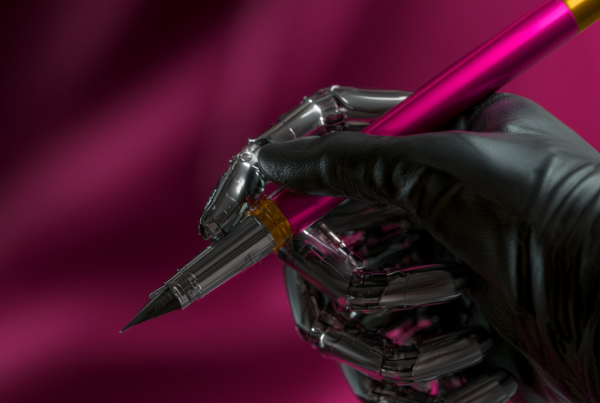
Explore how embracing next-generation production pipelines eliminates bottlenecks in the modern animation studio.
There’s a polite fiction floating around a lot of motion teams: that the traditional pipeline is clunky, sure, but still basically fine. It isn’t fine. It’s expensive, fragile, slow, and weirdly good at burning out talented people while pretending that suffering is just part of the craft. Too many studios are still operating like the software stack, handoff model, and approval rhythm of ten years ago should somehow support today’s content demands. That’s fantasy.
Clients want more versions, more channels, faster turnarounds, more personalization, more performance accountability, and somehow higher craft at the same time. Internal teams want flexibility, cleaner collaboration, and fewer 2 a.m. export disasters. Yet a lot of studios are still forcing modern creative problems through legacy production frameworks built for a different era. Then they act surprised when everything bottlenecks in production, revisions spiral, and the team starts designing around what’s easiest to produce rather than what’s best for the work.
That’s the real issue: old workflows don’t just slow execution. They quietly lower ambition. They train teams to avoid complexity, avoid experimentation, and avoid ideas that might break the pipeline. When your system punishes creative risk, your output gets safer. Not because the team lacks talent, but because the process keeps telling them no.
Legacy pipelines are not “stable.” They are just familiar.
A lot of people defend old motion workflows by calling them proven. What they usually mean is familiar. Those are not the same thing. A pipeline held together by nested project files, duplicate assets, manual relinking, scattered feedback threads, and one overworked senior artist who knows where all the bodies are buried is not stable. It’s just survived long enough that people confuse endurance with health.
Legacy frameworks often depend on rigid linear handoffs: strategy to design, design to storyboard, storyboard to animation, animation to edit, edit to versioning, versioning to delivery. On paper, that sounds organized. In reality, it creates friction at every seam. Every handoff introduces interpretation risk, delays, and quality loss. By the time feedback comes back upstream, the team has already invested too much time in the wrong thing.
Worse, these workflows usually assume that motion production is a sequence of locked stages. That assumption collapses under modern campaign realities. Brands now need adaptable systems, not one-off outputs. They need assets that can evolve across platforms, aspect ratios, languages, audiences, and performance findings. A brittle, stage-gated process can’t support that without turning every request into a fire drill.
And then there’s the emotional tax. Every studio has felt it: the constant low-level anxiety of knowing the file structure is a mess, the plugin stack is inconsistent, the render queue is unpredictable, and one last-minute change might ripple through six departments. Teams lose confidence in their own process. That hesitation shows up in the work.
The new production pipeline is less about tools than mindset
People love talking about the latest motion tools as if buying software equals transformation. It doesn’t. New tech slapped on top of a broken production culture just creates more expensive chaos. The meaningful shift is not “what app are we using?” It’s “how is the studio designed to work?”
Next-generation motion pipelines are modular, collaborative, and system-aware. They assume iteration is constant, not exceptional. They reduce destructive handoffs. They connect design decisions to production realities earlier. They build for reuse, not just delivery. They make versioning part of the plan instead of a painful afterthought.
That usually means a few practical changes. Shared asset ecosystems instead of isolated working files. Design systems that account for motion behavior from the beginning. Templates that are actually intelligent, not creatively deadening. Cloud-based review that centralizes feedback instead of spraying comments across email, chat, decks, and someone’s memory. Better interoperability between design, 3D, edit, and delivery environments. More automation where repetition adds no value. Fewer manual rituals performed simply because “that’s how we’ve always done it.”
The strongest teams I’ve seen are not obsessed with replacing humans. They’re obsessed with removing dumb labor. No experienced animator wants to spend hours rebuilding version sets by hand, fixing preventable file issues, or chasing missing fonts. That’s not craftsmanship. That’s process debt.
When the pipeline improves, creative people get time back for what actually matters: timing, storytelling, visual invention, polish, and experimentation. That’s the whole point.
Speed is not the enemy of quality. Bad systems are.
There’s an old-school attitude in parts of the industry that faster workflows automatically cheapen the work. I don’t buy that. Speed is only dangerous when it comes from cutting thinking, cutting taste, or cutting review discipline. But speed created by better infrastructure is a gift. It allows more rounds of refinement, more testing, more strategic flexibility, and more room to discover stronger ideas.
Studios that cling to slow pipelines often romanticize friction as if hardship guarantees quality. It doesn’t. Friction usually just guarantees delays. I’ve seen teams spend two days untangling a technical mess that had nothing to do with the concept, the brand, or the audience. Nobody should confuse that with rigor.
A modern pipeline increases quality because it shortens the distance between idea and evaluation. You can prototype sooner. You can test motion behavior earlier. You can expose creative weaknesses before they become expensive. You can build responsive systems instead of static deliverables. You can actually make decisions based on how the work performs in context, not just how it looks on a presentation slide.
This matters especially in marketing creative, where the output rarely lives as one pristine hero asset. It lives as a family of assets, adapted and deployed across touchpoints that all have different constraints. The studio that can move cleanly between concept, production, adaptation, and optimization has a competitive advantage. The one still treating every version as a handcrafted emergency will keep bleeding margin and morale.
What studios should fix first
If your team knows the current process is dragging everyone down, the answer is not to blow everything up overnight. Most studios need targeted operational honesty before they need some giant reinvention project. Start by identifying where work consistently stalls. Not where people complain the loudest, but where time, confidence, and clarity are actually being lost.
First, audit handoffs. Count how many times a project changes ownership from brief to delivery. Every transition creates delay and reinterpretation. If departments are working in sequence with minimal overlap, that’s a problem. Bring motion thinking earlier into concept and design, and bring production constraints into planning before big creative decisions are locked.
Second, standardize the boring stuff. Naming conventions, folder structures, asset packaging, version control, output specs, review protocols. None of this is glamorous. All of it matters. Creative teams hate excessive process, and rightly so, but they hate preventable chaos even more. The best operational rules remove noise rather than create it.
Third, build reusable systems where repetition is predictable. Brand campaigns, product launches, social cutdowns, localization packages, retail loops, internal communications kits—these are all opportunities to create structured flexibility. Reusable components should support better creative, not flatten it. Done well, systems free up energy for the parts that actually deserve custom attention.
Fourth, invest in review workflows. Feedback is where many motion pipelines go to die. Scattered comments, contradictory stakeholders, frame-specific confusion, and delayed approvals can destroy momentum faster than any render issue. Use review environments that keep discussion attached to the work, timecoded, visible, and accountable. If nobody knows whose note matters, your process is already broken.
Fifth, automate the obvious. Versioning, transcodes, format outputs, repetitive asset swaps, delivery packaging, metadata cleanup. If someone is manually repeating the same production action dozens of times a month, that task is asking to be redesigned.
Creative leadership has to stop tolerating pipeline dysfunction
This is where I’m opinionated in a way some people won’t like: pipeline problems are not just operational issues. They are leadership issues. If creative directors, studio leads, and executive teams keep accepting broken workflows as the cost of doing business, then they are actively shaping weaker output. You cannot claim to care about craft while ignoring the machinery that crushes it.
Too many leaders stay detached from production mechanics because they think process is somebody else’s department. That’s lazy. The pipeline determines what kind of ideas survive contact with reality. If your systems punish iteration, discourage scale, and make collaboration painful, then your creative ceiling is lower than you think.
Strong creative leadership means protecting the team from avoidable waste. It means recognizing that operational design is creative enablement. It means investing in technical infrastructure, documentation, workflow planning, and cross-functional communication with the same seriousness given to pitch decks and visual references.
It also means being honest about talent retention. Great motion artists do not leave only because of money or title. They leave because they get tired of fighting nonsense. They leave when every project feels harder than it should be. They leave when preventable bottlenecks steal the joy from the work. If a studio wants better output, it should start by making the job less unnecessarily punishing.
The future belongs to studios that can adapt without drama
The industry is not moving toward simpler content demands. It’s moving toward greater complexity, more channels, more dynamic asset ecosystems, more real-time adaptation, and tighter links between creative production and business performance. Studios that still rely on legacy motion frameworks will keep feeling that pressure as chaos. Studios that modernize their pipelines will feel it as momentum.
The difference is not hype. It’s operational maturity. A next-generation production pipeline doesn’t magically make a mediocre idea great. But it does give strong teams the ability to move faster, collaborate better, protect quality, and scale without collapsing under their own process. That matters more now than ever.
The old workflow had its moment. It helped build a lot of great work. But nostalgia is not a production strategy. If the pipeline is slowing the team, shrinking the ideas, and wasting energy on avoidable friction, then it’s already obsolete. The smartest studios will stop defending it and start building something fit for the way motion design actually works now.